Ginkgo Biloba in Neuro Lift: What a 6-Year Trial Showed and Why Bleeding Risk Matters
Quick answer
Ginkgo biloba leaf extract is the second ingredient in Neuro Lift's 635 mg blend, and the label does not say how much is there. The largest trial gave 240 mg a day to 3,069 older adults for a median of 6.1 years and found no slower decline than placebo. Ginkgo may raise bleeding risk with blood thinners.
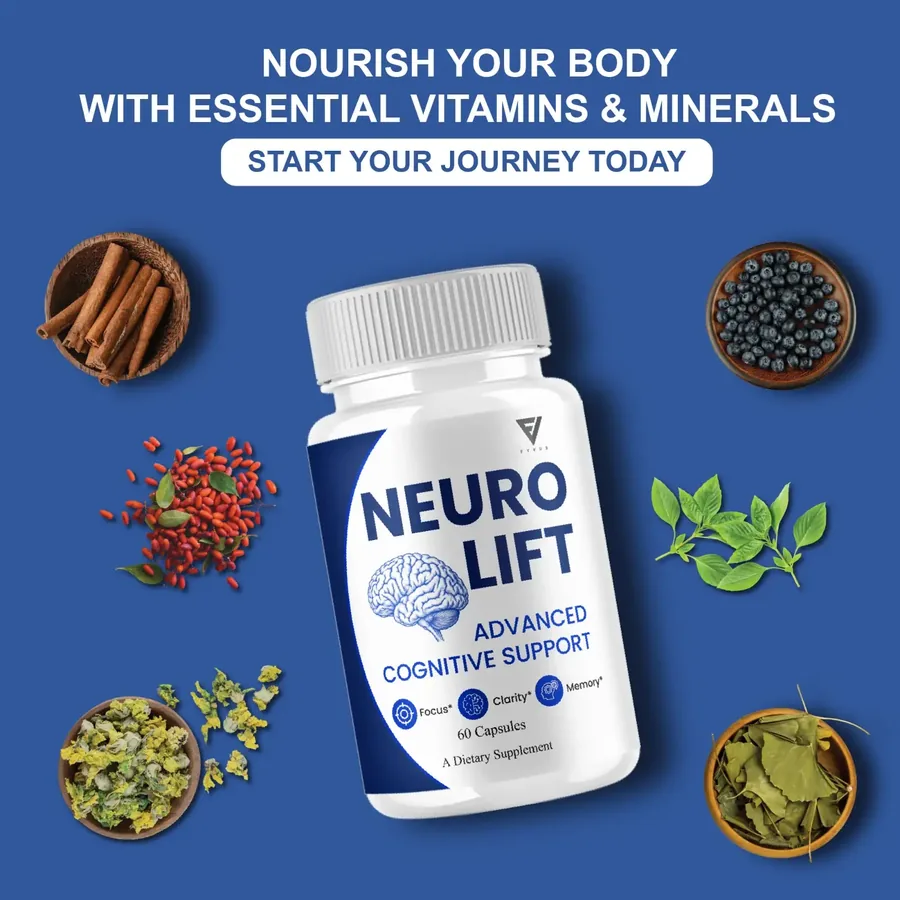
Where does ginkgo show up on the Neuro Lift label?
Ginkgo is the second name in the WMG-NVT Exclusive Blend, a 635 mg mix of ten botanicals and nutrients. The panel prints the blend's total weight only, so the amount of ginkgo in each serving is not published.
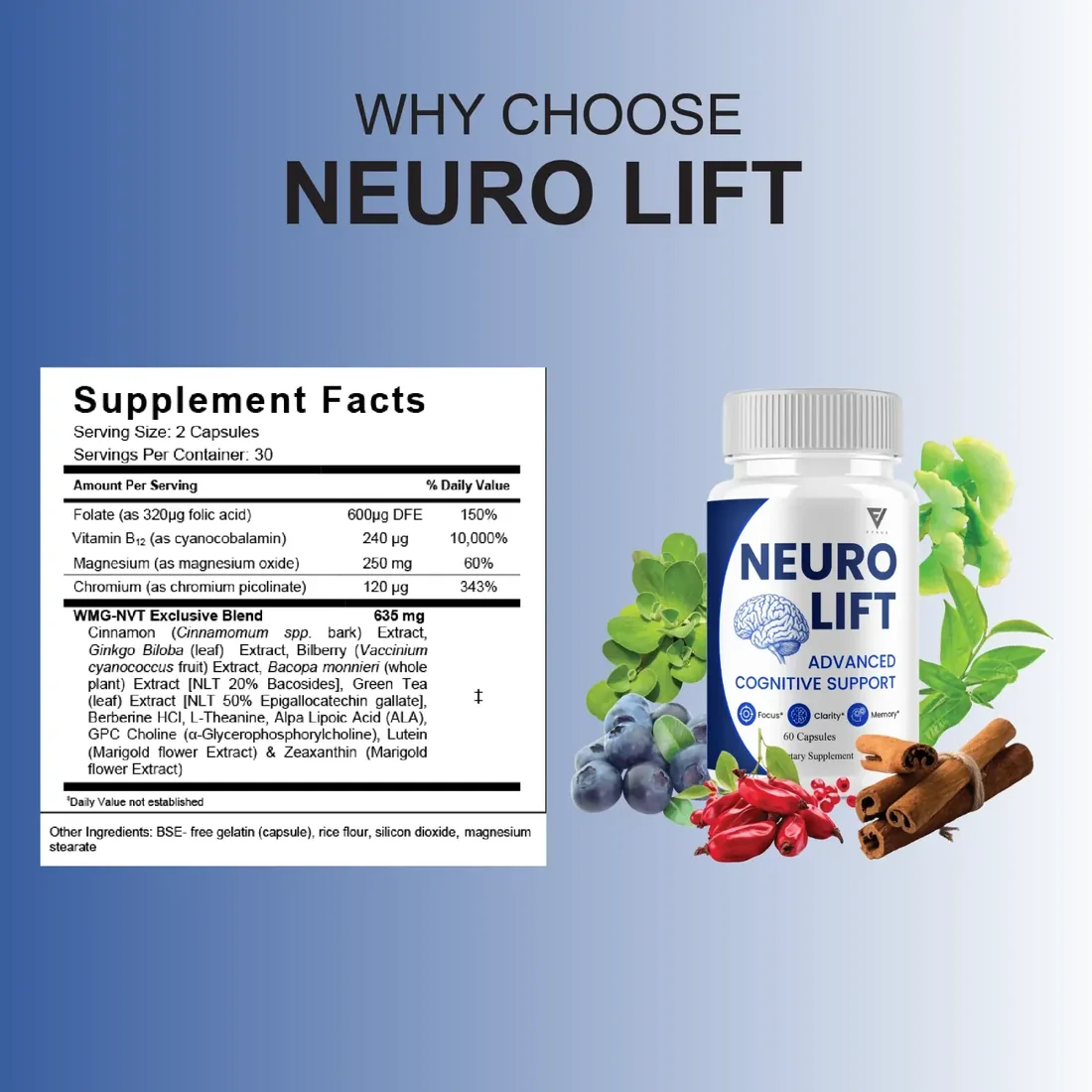
- Serving size. Two capsules make one serving and a bottle holds 30. Every number on the panel is for 2 capsules.
- The blend line. 635 mg is the weight of all ten blend ingredients added together, not of ginkgo.
- Ginkgo biloba (leaf) extract. Listed second, right after cinnamon. No strength and no weight sit next to it.
- The double dagger. It means no Daily Value has been set for anything in the blend.
Look at the neighbors on that list. Bacopa carries a printed strength (at least 20% bacosides) and so does green tea (at least 50% EGCG). Ginkgo has no strength figure at all, which makes it hard to match against any study.
What is ginkgo biloba extract?
Ginkgo biloba is a tree, and supplements use an extract made from its leaves. It is the herb with the most memory research behind it, so it is the easiest blend ingredient to hold up against real trial data.
| Detail | In the largest trial | On the Neuro Lift label |
|---|---|---|
| Plant part | Leaf extract | Leaf extract |
| Named extract | EGb 761, a standardized product | No name given |
| Strength | Standardized | Not printed |
| Amount a day | 240 mg, taken as 120 mg twice | Not published |
| Length of use | Median of 6.1 years | No timeline printed |
That gap is the heart of the matter. A trial result belongs to the extract and the dose that were tested. When a label names neither, nobody can say the result applies to the capsule.
Thinking about Neuro Lift? The best price is on the 15-bottle pack.
15 bottles for $152.88, $10.19 a bottle. eBay Money Back Guarantee · Free US shipping · Secure checkout.
What happened when ginkgo was tested for memory?
It did not slow decline. The GEM trial gave 3,069 adults aged 72 to 96 either ginkgo extract or a placebo and followed them for a median of 6.1 years (JAMA 2009, Snitz et al., GEM cognitive decline trial). Ginkgo did not lead to less decline in thinking than the placebo did.
- Start
3,069 people enrolled
Adults aged 72 to 96. Some had normal thinking and some had mild cognitive impairment.
- Every day
120 mg twice a day
Half took a standardized ginkgo extract. The other half took a dummy pill.
- 6.1 years
Follow-up ends
That was the median time each person stayed in the study.
- Result
No difference
Decline was no slower with ginkgo, and no area of thinking differed between the groups.
Other reviews line up behind that result.
- NCCIH says dementia rates did not differ between ginkgo and placebo in GEM, and three large studies found no lower dementia risk (NCCIH, Ginkgo: Usefulness and Safety).
- A Cochrane review of 36 trials, most small and shorter than three months, found the evidence of benefit inconsistent and not convincing (Cochrane, Ginkgo biloba for dementia and cognitive impairment).
- Memorial Sloan Kettering sums up the clinical studies as generally showing no gain in thinking (Memorial Sloan Kettering, Ginkgo (About Herbs)).
- The Alzheimer's Association reports ginkgo did no better than placebo at preventing or delaying Alzheimer's (Alzheimer's Association, Alternative Treatments).
NCCIH does mention hints of help for dementia symptoms at fairly high doses, but calls the results inconsistent. That finding is about people who already have dementia. Neuro Lift is a supplement, and it is not sold to treat any disease.
Could the 635 mg blend hold the dose GEM used?
Only by crowding out almost everything else. FDA labeling rules list blend ingredients from heaviest to lightest (FDA, Dietary Supplement Labeling Guide, Ch. IV), and ginkgo sits second, behind cinnamon.
| How the blend might be split | Ginkgo | Left for the other eight |
|---|---|---|
| All ten get the same share | About 63.5 mg | About 508 mg |
| Ginkgo at the GEM dose | 240 mg | At most 155 mg, since cinnamon must weigh at least 240 mg too |
| Ginkgo as large as the order allows | About 317 mg | Close to nothing, since cinnamon would take the other half |
A second check gives the same answer. The trial doses of the three best-studied blend ingredients, ginkgo at 240 mg, bacopa at 300 mg and L-theanine at 200 mg, add up to 740 mg. That is 105 mg more than the whole blend weighs.
The whole panel is explained line by line on the Neuro Lift Supplement Facts page, and our article on the blend versus the research runs the same math for every ingredient.
What are ginkgo's side effects and drug interactions?
Dizziness, stomach upset and headache are the side effects NCCIH lists most often (NCCIH, Ginkgo: Usefulness and Safety). The bigger concern is bleeding: ginkgo may lengthen bleeding time and can stack with medicines that slow clotting (Memorial Sloan Kettering, Ginkgo (About Herbs)).
Blood thinners
NCCIH says ginkgo may raise bleeding risk in people who take anticoagulants such as warfarin.
Pain relievers
Memorial Sloan Kettering notes ginkgo can add to the anticlotting effect of NSAIDs.
Planned surgery
Ask the surgeon or dentist whether to pause ginkgo, and when. Our sources set no fixed rule.
Pregnancy
NCCIH says ginkgo may be unsafe in pregnancy, and the Neuro Lift label says not to use it if pregnant or nursing.
In the trials themselves, ginkgo looked mild. Cochrane found no more side effects than with placebo (Cochrane, Ginkgo biloba for dementia and cognitive impairment), and GEM saw no significant gap in serious events, major bleeding included. Those are group averages, and they do not cancel the warning for someone already on a blood thinner.
Ginkgo is not the only ingredient here that can meet your medicines. Our guide to berberine, ginkgo and your medicines covers the others and what to ask a pharmacist.
Who should skip ginkgo, or check with a doctor first?
Skip it if you are pregnant, nursing or under 18, because the label and this site's adults-only rule exclude you. Check first if you take anything that affects bleeding.
Do not take it
- You are pregnant or breastfeeding.
- You are under 18.
- A doctor has told you to avoid ginkgo or herbal blends.
Talk to a doctor or pharmacist first
- You take warfarin or another anticoagulant.
- You take daily aspirin or use NSAIDs often.
- You have surgery or dental work booked.
- You take several prescription medicines.
What does ginkgo add to Neuro Lift?
For memory, the evidence says very little. Its clearest effect in people is on clotting, which makes ginkgo the main reason to review your medicines before starting Neuro Lift.
The brand's graphics mention "healthy circulation" and "mental clarity and focus". Those are marketing lines with the FDA asterisk. They are not results from ginkgo trials.
- Tested at 240 mg a day for about 6 years, with no slower decline
- Amount in the blend: not printed
- Main caution: bleeding risk with blood thinners
- Not a reason to put off a check-up for memory changes
If you want the blend ingredient with the more encouraging, though still small, studies, read the bacopa page.
Ginkgo biloba FAQ: memory, dose and safety
Does ginkgo biloba help memory?
Not in the best trial. GEM gave 240 mg a day to 3,069 older adults for a median of 6.1 years, and their thinking declined no more slowly than with placebo.
Does ginkgo prevent dementia?
The evidence says no. Dementia rates in GEM matched placebo, and NCCIH reports that three large studies found no lower risk.
What is the ginkgo biloba dosage for memory?
The largest trial used 120 mg of a standardized extract twice a day, 240 mg in all, and saw no benefit. Neuro Lift does not print how much ginkgo it contains.
How long does ginkgo take to work?
No working timeline has been shown. Most trials in the Cochrane review lasted under three months with mixed results, and GEM ran about six years without a benefit.
Is ginkgo safe to take every day?
Daily use for years looked mild in GEM, where serious side effects did not differ from placebo. Anyone who takes a blood thinner should ask a doctor first.
Is ginkgo safe with blood thinners?
Ask your doctor before you combine them. NCCIH says ginkgo may raise bleeding risk with anticoagulants such as warfarin.
What are ginkgo side effects?
Dizziness, stomach upset and headache are the common ones. Bleeding is the serious one, mostly for people on blood thinners or NSAIDs.
Is ginkgo safe for high blood pressure?
None of the sources we used gives a blood pressure warning for ginkgo. If you take heart or blood pressure medicine, check with your doctor before you start.
How much ginkgo is in Neuro Lift?
Not published. Ginkgo is one of ten ingredients sharing the 635 mg blend, and only the total is printed.
Page check
Written by
Writes and fact-checks every page against the Supplement Facts panel, the back label and public health sources.
Medically reviewed by
Dr. Gianna Link, MD, PhD, MD, Physician
Medical reviewer. Review date: October 12, 2026.
- Last checked October 12, 2026
- Facts from the bottle, the sales page and the sources cited above
- Found an error? Write to [email protected] or read how we check facts