Neuro Lift Ingredients: The 14 Names on the Label
Quick answer
Two Neuro Lift capsules hold 14 named ingredients.
Vitamin B12, folate, magnesium and chromium come with amounts. Ginkgo, bacopa, L-theanine, alpha-GPC, green tea extract, berberine and four others share a 635 mg blend.
Check the full panel.
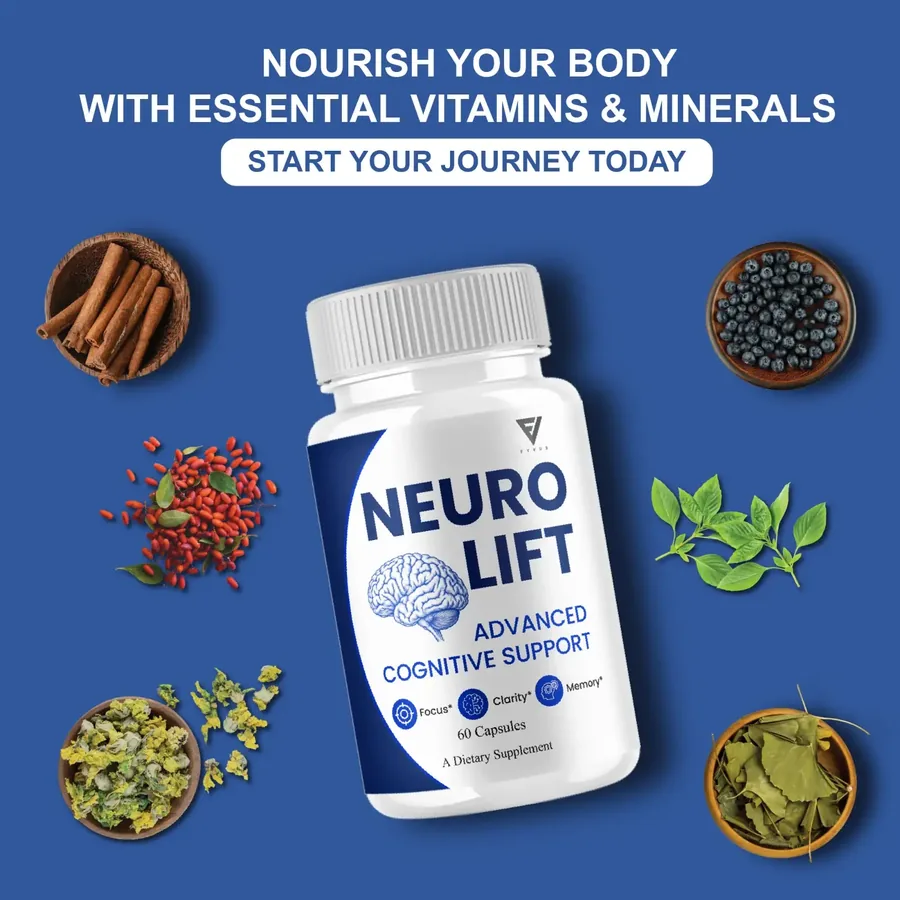
What ingredients are in Neuro Lift?
Neuro Lift names 14 ingredients in each 2-capsule serving. Four vitamins and minerals come with printed amounts. The other ten share the 635 mg WMG-NVT Exclusive Blend, and none of the ten has a number of its own.
| Ingredient | Per 2 capsules | Best human finding |
|---|---|---|
| Folate (as folic acid) | 600 mcg DFE (320 mcg folic acid) | Matters only if you run short |
| Vitamin B12 (cyanocobalamin) | 240 mcg | Matters only if you run short |
| Magnesium (oxide) | 250 mg | Too few trials to judge |
| Chromium (picolinate) | 120 mcg | One trial, 26 older adults |
| Cinnamon bark extract | not printed | No memory trials in people |
| Ginkgo biloba leaf extract | not printed | Six-year trial: no slower decline |
| Bilberry fruit extract | not printed | None found |
| Bacopa monnieri (20% bacosides) | not printed | Small trials, modest gains |
| Green tea leaf extract (50% EGCG) | not printed | Mostly tested as tea |
| Berberine HCl | not printed | No memory trials in people |
| L-theanine | not printed | Brief attention effects |
| Alpha lipoic acid | not printed | No usable dementia trials |
| Alpha-GPC (GPC choline) | not printed | Tested only in dementia |
| Lutein and zeaxanthin (marigold) | not printed | Brain-scan changes only |
Five without a guide are covered below.
Which Neuro Lift ingredients have a full guide?
Eight of the 14 have a dedicated guide covering trials, dosing and safety. Choose one for a summary.
B vitamins
Vitamin B12 and folate
A B12 shortage can harm memory and shows up on a blood test. With normal levels, extra B vitamins changed little.
Studied at: About 500 to 1,000 mcg B12; 400 to 2,500 mcg folic acid.
Read the Vitamin B12 and folate pageMineral, 250 mg as oxide
Magnesium
Too few randomized trials for a verdict on thinking. Oxide often loosens stools.
Studied at: No memory dose; stay under 350 mg a day from supplements.
Read the Magnesium pageLeaf extract
Ginkgo biloba
In the six-year GEM trial of 3,069 older adults, thinking declined at the same pace as on placebo.
Studied at: 120 mg twice a day.
Read the Ginkgo biloba pageAyurvedic herb
Bacopa monnieri
Pooled trials found quicker attention scores. Gains were modest.
Studied at: 300 to 450 mg a day for 12 weeks or more.
Read the Bacopa monnieri pageTea catechins
Green tea extract
Memory findings mostly come from tea drinks with caffeine. Extracts are a rare cause of liver injury.
Studied at: 9 to 300 mg of EGCG a day.
Read the Green tea extract pagePlant compound
Berberine
Studied for blood sugar, never for memory in people. It also affects how several drugs are processed.
Studied at: 250 to 500 mg two or three times a day.
Read the Berberine pageTea amino acid
L-theanine
Sped up reaction time within an hour in healthy volunteers, with wide uncertainty.
Studied at: 50 to 400 mg, often 200 mg.
Read the L-theanine pageCholine source
Alpha-GPC
Every trial enrolled people living with dementia.
Studied at: 400 mg three times a day.
Read the Alpha-GPC page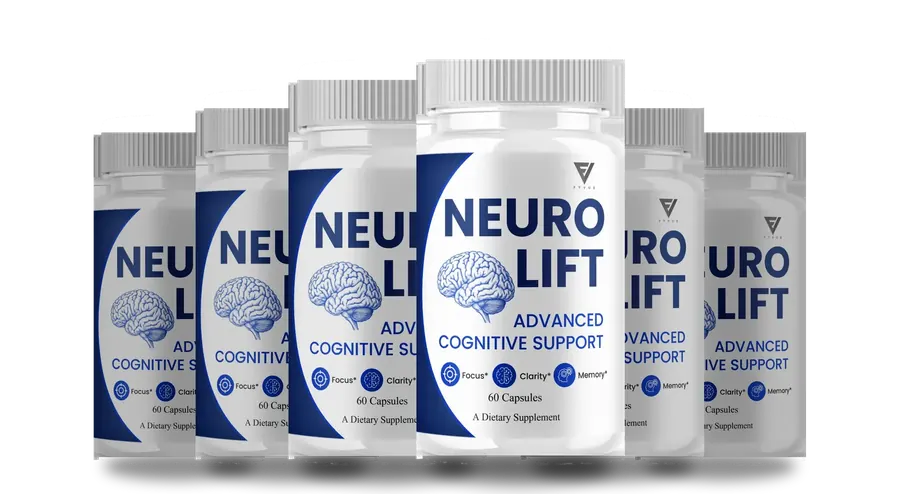
Thinking about Neuro Lift? The best price is on the 15-bottle pack.
15 bottles for $152.88, $10.19 a bottle. eBay Money Back Guarantee · Free US shipping · Secure checkout.
How do the label amounts compare with study doses?
Two rows have both a printed amount and a studied dose: B12 and folic acid. Blend rows show a blank bar, because the label gives nothing to measure.
Label: 240 mcg. Studied: about 500 to 1,000 mcg a day in trials (helps only when someone is low). (NIH ODS, Vitamin B12 (health professional)) (Cochrane, Folic acid with or without B12 for cognition)
Label: 320 mcg (600 mcg DFE). Studied: about 400 to 2,500 mcg folic acid a day in trials. (NIH ODS, Folate (health professional)) (Cochrane, Folic acid with or without B12 for cognition)
Label: not published. Studied: 240 mg a day (GEM trial, about 6 years). (JAMA 2009, Snitz et al., GEM cognitive decline trial)
Label: not published. Studied: 300 to 450 mg a day for 12 weeks or more. (J Ethnopharmacol 2014, Bacopa meta-analysis of RCTs)
Label: not published. Studied: 50 to 400 mg, often 200 mg, short term. (Nutr Rev 2025, Payne et al., tea and L-theanine meta-analysis)
Label: not published. Studied: 1,200 mg a day, only in people with dementia. (Alzheimer's Drug Discovery Foundation, Alpha-GPC)
Label: not published. Studied: 10 mg + 2 mg a day for 12 months. (Nutrients 2021, Yagi et al., Lutein and brain health)
Chromium: what does 120 mcg do?
Mostly it is researched for blood sugar, not memory. Neuro Lift supplies 120 mcg of this trace mineral as picolinate, printed as 343% of the 35 mcg Daily Value, and NIH notes that healthy people do not run short of it (NIH ODS, Chromium (health professional)).
The only memory trial gave chromium to 26 older adults for 12 weeks. Learning and recall did not improve, though interference on some tasks dropped (Nutr Neurosci 2010, Krikorian et al., Chromium and cognition). A single small trial is a hint, not proof.
Who should ask first
No upper limit is set, but data are thin. NIH cites case reports involving the kidneys and liver, plus a chance of low blood sugar when chromium meets insulin or diabetes pills.
Cinnamon bark extract: is there memory research?
Not in people. What brain findings exist come from lab dishes and animals (Alzheimer's Drug Discovery Foundation, Cinnamon). Cinnamon heads the blend, printed as "Cinnamomum spp." with no species named.
Human trials looked at blood sugar, and NCCIH calls the results unclear (NCCIH, Cinnamon: Usefulness and Safety).
The species matters. Cassia holds coumarin, tied to liver effects, and larger amounts of Ceylon are considered unsafe in pregnancy. The label lets you rule out neither.
Bilberry fruit extract: is there any memory evidence?
We found none. NCCIH finds no condition that bilberry clearly helps, and its page never mentions memory (NCCIH, Bilberry: Usefulness and Safety). The label names the source "Vaccinium cyanococcus fruit".
Its best-known claim, better night vision, failed in the strongest studies. Safety data run as long as six months at doses up to 160 mg daily. Listed third, it can be at most about 211 mg if the order rule holds.
Alpha lipoic acid: what do the trials show?
An antioxidant, ALA has never been trialed for memory in healthy adults, and Cochrane reviewers could not find one dementia trial that passed their screening (Cochrane, Alpha lipoic acid for dementia). The panel spells it "Alpa Lipoic Acid".
- Dose in dementia research
- 600 to 900 mg a day
- Against the blend
- 600 mg is about 94% of 635 mg
- Blood sugar
- No better than placebo in a 2019 review
Who should ask first
People on diabetes medicine, since high doses can lower blood sugar, and people in cancer treatment, as ALA may work against chemotherapy (Memorial Sloan Kettering, Alpha-Lipoic Acid (About Herbs)). The sources we read say nothing about pregnancy.
Lutein and zeaxanthin: what did small trials find?
Older adults showed shifts on brain scans, while memory scores did not clearly move. These yellow plant pigments occur in leafy greens; Neuro Lift lists marigold flowers as the source.
Four randomized trials of 44 to 50 people gave 10 mg lutein and 2 mg zeaxanthin daily for 12 months (Nutrients 2021, Yagi et al., Lutein and brain health). The authors note the studies were few and all from North America. Up to 20 mg lutein a day has raised no safety concerns (Alzheimer's Drug Discovery Foundation, Lutein and Zeaxanthin).
Which ingredients overlap in ways that matter?
Some ingredients push the same way, so effects can stack.
| If you | Ingredients | Why | Source |
|---|---|---|---|
| Take a blood thinner, aspirin or an NSAID | Ginkgo | Bleeding risk may rise | (NCCIH, Ginkgo: Usefulness and Safety) |
| Take insulin or diabetes pills | Berberine, chromium, cinnamon, ALA | All four can pull blood sugar down | (NCCIH, Diabetes and Dietary Supplements) |
| Have liver disease | Green tea extract | Extracts have caused rare liver injury | (LiverTox (NIDDK), Green Tea) |
| Are pregnant or nursing | Whole product | Back label rules it out | Back label |
Every reported reaction is collected on the Neuro Lift side effects page.
Neuro Lift ingredients: frequent questions
What are the Neuro Lift ingredients?
Folate, B12, magnesium and chromium with amounts, plus a 635 mg blend of ten botanicals and nutrients.
Does chromium help memory?
There is little to show it does. One 12-week trial in 26 older adults found no better learning or recall.
Is 120 mcg of chromium safe?
Probably, for most adults; no upper limit exists. With kidney or liver disease or diabetes medicine, ask a doctor.
Does cinnamon help memory?
No study in people shows it. Only lab and animal work exists.
What is bilberry good for?
Nothing proven. NCCIH says no health condition has been clearly shown to improve with it.
Can alpha lipoic acid lower blood sugar?
Yes, at high doses, and it can stack with diabetes drugs.
How much lutein and zeaxanthin should I take daily?
Brain studies used 10 mg plus 2 mg a day. The amount in Neuro Lift is not printed.
Why does Neuro Lift not list the amount of each herb?
They sit in a proprietary blend, which only has to show its 635 mg total.
Page check
Written by
Writes and fact-checks every page against the Supplement Facts panel, the back label and public health sources.
Medically reviewed by
Dr. Gianna Link, MD, PhD, MD, Physician
Medical reviewer. Review date: October 12, 2026.
- Last checked October 12, 2026
- Facts from the bottle, the sales page and the sources cited above
- Found an error? Write to [email protected] or read how we check facts