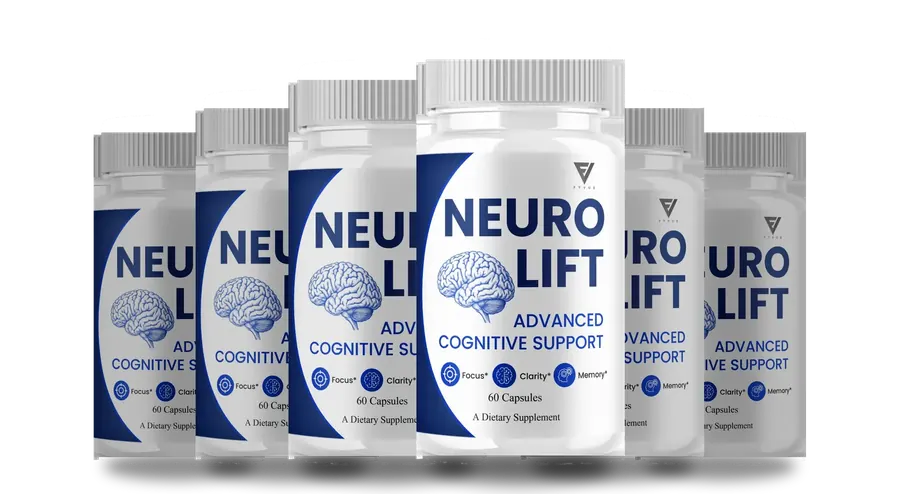
How Does Neuro Lift Work in the Brain? 14 Ingredients
Quick answer
How Neuro Lift works comes down to its ingredients. The label lists 14 named ingredients, and each one has its own research history. Here is what each was studied for on its own, so you can see why they are in the capsule. Some have small trials, while others have none for memory.
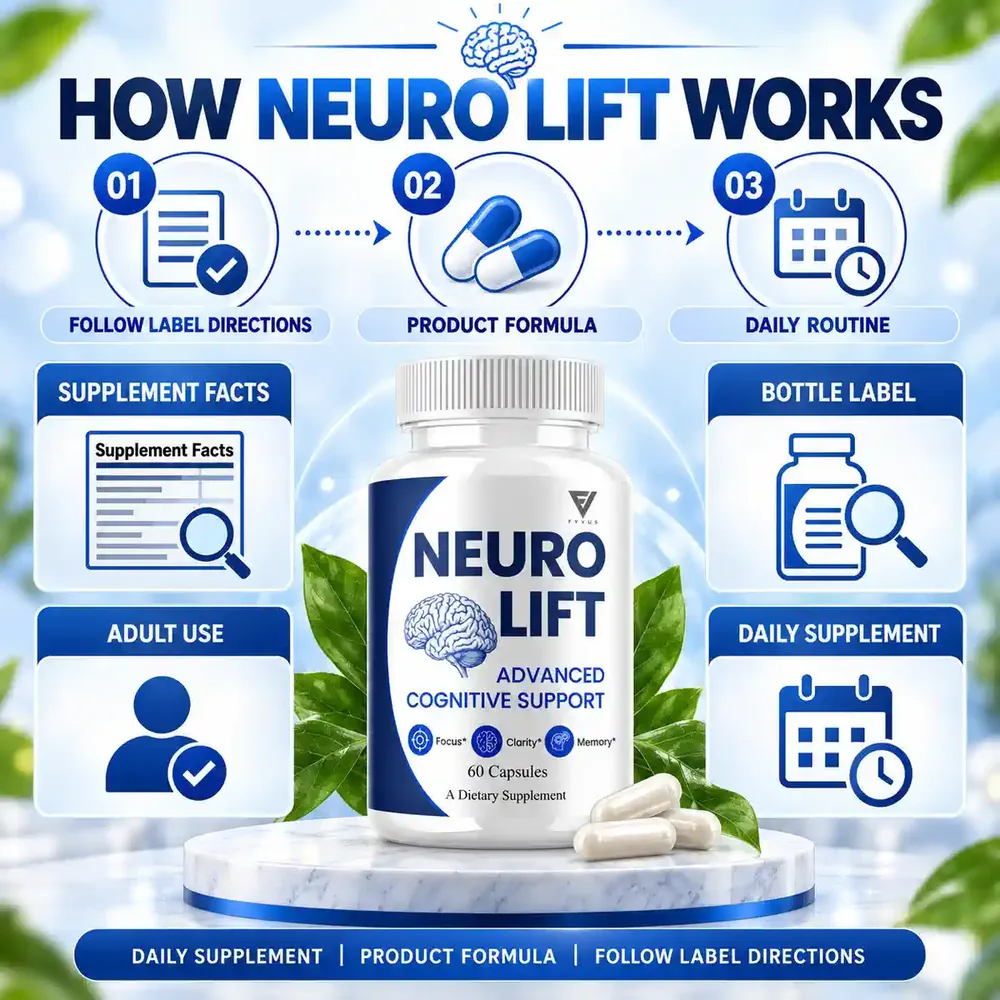
Many pages tell a neat story about how a brain capsule works. Neuro Lift's label tells no story at all. It lists ingredients and a serving. It leaves the explaining to the reader.
So this post does something plainer. It goes through the label in order and asks one question of each ingredient: what was it tested for, in whom, and at what dose?
Key facts
- The bottle gives no mechanism. It states goals only: focus, clarity and memory.
- The panel names 14 ingredients: four with amounts and ten inside the 635 mg blend.
- Most research here is on one ingredient at a time, not on the mixture.
- Cinnamon, bilberry, berberine and alpha lipoic acid have no memory trials in people that we found.
- Alpha-GPC trials enrolled people with dementia and used 1,200 mg a day.
- Memory trouble that is new or getting worse needs a doctor's check before any supplement.
What would it mean for a supplement like this to work?
For a supplement sold for thinking, working would mean that a person on the capsule does better on a thinking test than a similar person on a dummy capsule, over a stated time. That is the standard of a randomized, placebo-controlled trial. The FTC ranks that kind of trial highest (FTC, Health Products Compliance Guidance).
Neuro Lift has no such trial. So we cannot say how it works as a whole. We can describe the parts, and we will mark every place where the label leaves a blank.
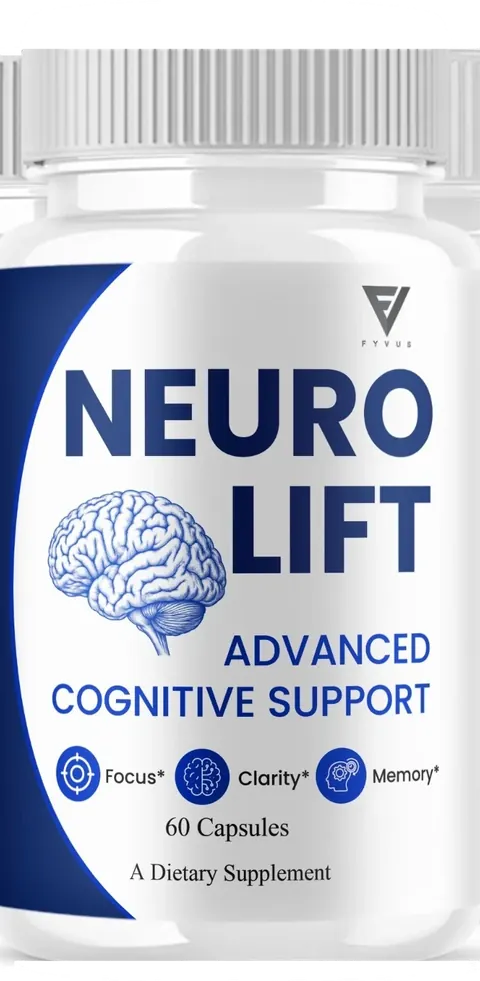
Would you like to see the bottle label and the listing together? The order page shows both, along with the current lot price.
We earn a commission if you order through this button. The price you pay does not change.
What do the vitamins and minerals do?
The four nutrients with printed amounts are the most concrete part of the label. They are also the part where research says the least about memory in healthy people.
- Vitamin B12 (240 mcg): a true shortage can harm memory, and that is a job for a doctor. With normal levels, extra B12 did little for thinking (NIH ODS, Vitamin B12 (health professional)).
- Folate (600 mcg DFE, from 320 mcg folic acid): in unselected older adults, a Cochrane review found no steady gain in thinking (Cochrane, Folic acid with or without B12 for cognition).
- Magnesium (250 mg as oxide): the review we read found too few trials to judge thinking. It is also the ingredient closest to a daily limit, which is 350 mg from supplements (NIH ODS, Magnesium (health professional)).
- Chromium (120 mcg): one small study of 26 older adults exists. It does not settle anything (Nutr Neurosci 2010, Krikorian et al., chromium in older adults).
What do the ten blend ingredients do?
The table gives the plainest summary we can build from the sources. Read the last column with care. The amount in the capsule is not published for any of them.
| Ingredient | What research looked at | Memory evidence in people |
|---|---|---|
| Cinnamon bark extract | Blood sugar and other uses | No memory trials found |
| Ginkgo biloba leaf extract | Decline in older adults over about six years | No slower decline than placebo (JAMA 2009, Snitz et al., GEM cognitive decline trial) |
| Bilberry fruit extract | Safe at food-level amounts | None found |
| Bacopa monnieri extract | Attention and reaction time, 12 weeks or more | Small gains; a larger trial is still needed (J Ethnopharmacol 2014, Bacopa meta-analysis of RCTs) |
| Green tea leaf extract | Mostly tea as a drink | Mixed; extracts carry a rare liver risk |
| Berberine HCl | Blood sugar | No human memory trials |
| L-theanine | Reaction time within hours of a dose | Quicker reactions, wide doubt (Nutr Rev 2025, Payne et al., tea and L-theanine meta-analysis) |
| Alpha lipoic acid | Mostly people with Alzheimer's | No usable trials in healthy people |
| Alpha-GPC | People with dementia, 1,200 mg a day | None in healthy adults (Alzheimer's Drug Discovery Foundation, Alpha-GPC) |
| Lutein and zeaxanthin | Brain scans over 12 months | Scan changes, not memory scores (Nutrients 2021, Yagi et al., Lutein and brain health) |
Why does the label not explain a mechanism?
A supplement label may use words like “supports” as long as it carries the FDA statement. It does not have to explain how, and it does not have to prove the support. The agency does not approve supplements before they reach shoppers (FDA, FDA 101: Dietary Supplements).
That is why the claims on the bottle stay short and the longer stories live on sales pages. When you read a story about neurons or pathways on a sales page, check whether it cites a trial of the product. For Neuro Lift, none is cited by the label.
What do the brand graphics add?
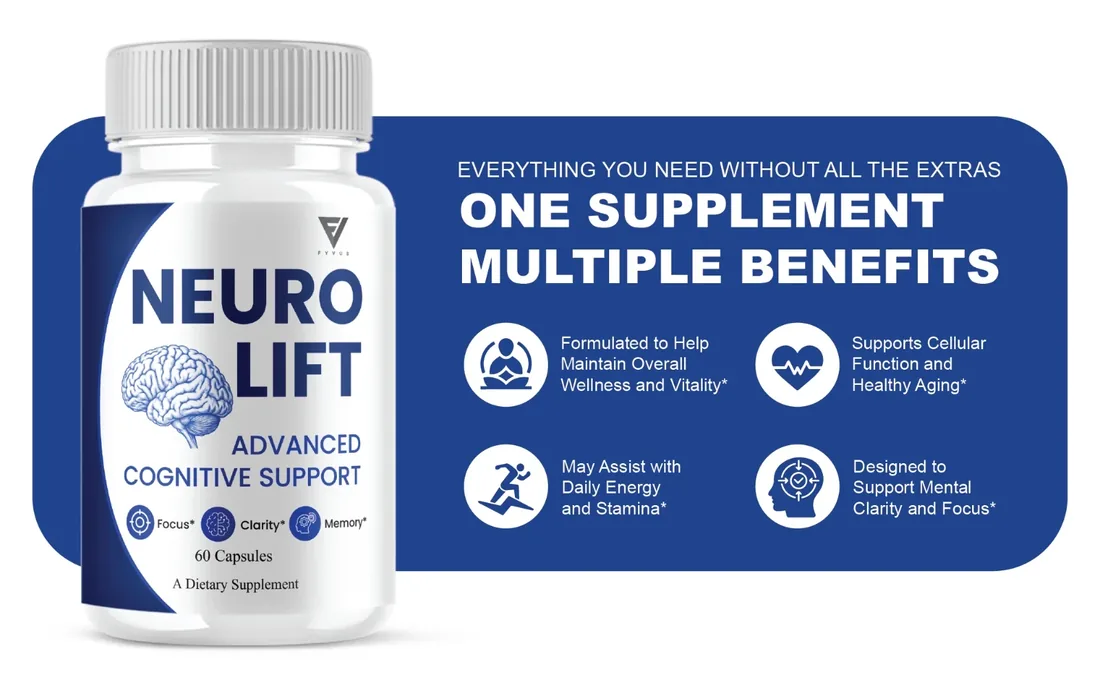
The brand's image pack shows panels about energy, mood, digestion and wellness. Those lines sit outside the bottle label. They are marketing claims, and no trial of this capsule backs them.
Look at one of them below. It lists general wellness claims, which is a different promise from the three words on the bottle.
What should you ask a doctor or pharmacist about it?
Bring the bottle, or a photo of the Supplement Facts panel, so they can read every ingredient. Four questions are worth asking.
- Does ginkgo in the blend matter for any blood thinner, aspirin or pain reliever I take? NCCIH says ginkgo may raise bleeding risk (NCCIH, Ginkgo: Usefulness and Safety).
- Does berberine matter for my other medicines? Memorial Sloan Kettering lists several drug clashes (Memorial Sloan Kettering, Berberine (About Herbs)).
- Should I have a B12 level checked before I add a B12 capsule?
- Is my other magnesium, such as an antacid, close to the 350 mg daily limit once I add 250 mg?
What can we honestly say about how it works?
We can say that it combines two groups of ingredients. One group is vitamins and minerals with printed amounts. The other is a set of plant extracts and amino-acid-type ingredients with hidden amounts.
We can say that a few of the second group have small, early studies on attention or reaction time. We cannot say that a serving of Neuro Lift delivers those doses, and we cannot say what it does in your body. If you want a firm answer on a specific worry, ask a doctor or pharmacist and bring the bottle.
Frequently asked questions
How does Neuro Lift work in the brain?
The label does not say, and no study of the formula exists. We can only report what single ingredients were tested for, at doses the label does not match.
Is the Neuro Lift formula proven?
No. The formula has never been tested as a whole. The label claims are marked with the FDA asterisk, which means they were not evaluated by the agency.
Which ingredient does the most?
That cannot be known, because the blend amounts are not published. Bacopa and L-theanine have the best small studies so far, but the doses used there are not the doses on the label.
Do the vitamins in Neuro Lift help memory?
They help when a person is low in them. For people with normal levels, trials found little to no effect on thinking.
Does Neuro Lift contain caffeine?
The label lists no caffeine figure. Some green tea extracts hold a little, and the label does not state which type of extract this is.
Can I take it with my medicines?
Ask a doctor or pharmacist first. Ginkgo can add to bleeding risk with blood thinners, and berberine can interact with several medicines.
What are the main ingredients in NeuroLift?
The formula names 14 ingredients, including ginkgo biloba, bacopa, L-theanine, B12, folate, magnesium and chromium. Four amounts are printed, and the other ten sit inside a 635 mg blend with no amounts.
Has NeuroLift been tested in a study?
No. No study of the NeuroLift formula exists. Individual ingredients have small trials at doses the label does not match, so those results cannot be applied directly to the capsule.
Our view
The fairest way to say it is this: Neuro Lift is a list of ingredients with a goal attached. The goal is clear. The route from ingredient to goal is not shown, and the dose that would carry it is hidden for ten of the fourteen.
We think readers are best served by that plain framing. It leaves room for a small benefit, and it keeps you from paying for a story. If you try it, keep the expectations modest and let a doctor check any memory change.
Last updated
Page check
Written by
Writes and fact-checks every page against the Supplement Facts panel, the back label and public health sources.
Medically reviewed by
Dr. Gianna Link, MD, PhD, Physician
Medical reviewer. Review date: October 16, 2026.
- Last checked October 16, 2026
- Facts from the bottle, the order listing and the sources cited above
- Found an error? Write to [email protected] or read how we check facts