Do Brain Supplements Work for Memory? A NeuroLift Guide
Quick answer
Do brain supplements work for memory? Research on brain supplements is still developing. Ingredients such as bacopa and L-theanine have small early studies, and B12 and folate matter mainly for people who run low. Here is what the research says for each ingredient, and where Neuro Lift fits in.
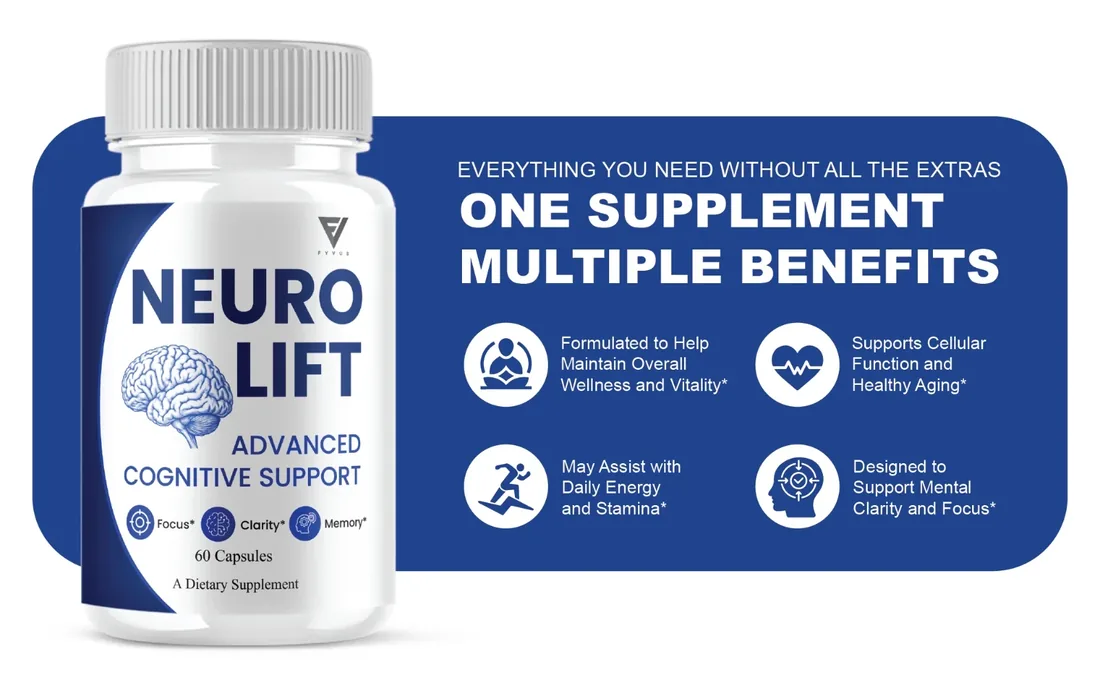
Capsules sold for focus and memory sound sure of themselves. The research is much less sure. Below we sort common ingredients by how much proof stands behind them, explain the rules on claims, and hold Neuro Lift to the same test.
Do brain supplements work? The plain verdict
For most adults with normal vitamin levels, no brain supplement has been shown to protect or improve memory. NCCIH, an NIH center, says direct evidence is lacking that any supplement prevents Alzheimer's or other dementia (NCCIH, 7 Things To Know About Supplements and Alzheimer's).
The Alzheimer's Association is blunter: no vitamin or supplement has been proven to prevent, treat or cure Alzheimer's (Alzheimer's Association, Alternative Treatments). The National Institute on Aging warns against unproven memory products sold as supplements (NIA, Forgetfulness: Knowing When to Ask for Help).
What about the Mayo Clinic version of this question?
We did not open a Mayo Clinic page for this post, so we do not quote one. Each claim here links to NIH, Cochrane, FDA, FTC or trial sources instead.
Thinking about Neuro Lift? The best price is on the 15-bottle pack.
15 bottles for $152.88, $10.19 a bottle. eBay Money Back Guarantee · Free US shipping · Secure checkout.
Which kinds of brain supplement ingredients have any evidence?
Sorted by type, a pattern appears: vitamins that fix a real shortage have a clear role, a few botanicals have small early studies, and the rest have little or nothing. Tap a group to see the doses studied.
Vitamin B12 and folate
Fixes a shortage
These help when a person is actually low. With normal levels, reviews found little to no effect on thinking (NIH ODS, Vitamin B12 (health professional)). A blood test settles it better than a capsule.
Studied at: about 500 to 1,000 mcg B12 and 400 to 2,500 mcg folic acid a day
Bacopa, L-theanine, lutein
Small early signal
Small trials found modest changes: faster attention with bacopa, quicker reactions with L-theanine, brain-scan changes with lutein. None proves better everyday memory.
Studied at: bacopa 300 to 450 mg; L-theanine 50 to 400 mg; lutein 10 mg
Ginkgo biloba
Big trial, no benefit
The most tested memory herb. The six-year GEM trial found it did not slow decline (JAMA 2009, Snitz et al., GEM cognitive decline trial).
Studied at: 120 mg twice a day (240 mg)
Magnesium, chromium, alpha-GPC
Too few trials
Magnesium has too few trials to judge, chromium one 26-person study, and alpha-GPC was tested only in dementia.
Studied at: alpha-GPC 1,200 mg a day in dementia; the others vary
Cinnamon, bilberry, berberine, ALA
No memory studies
Studied for blood sugar or other uses. We found no human memory trial for any of them.
Studied at: not studied for memory in people
Brain supplements that actually work: what the trials show
No single ingredient has strong proof for healthy memory. The table shows the best study we found for each, the dose it used and the result.
| Ingredient | Best evidence we found | Dose used | Result |
|---|---|---|---|
| Ginkgo biloba | GEM trial, 3,069 adults aged 72 to 96, median 6.1 years | 240 mg a day | Decline matched the placebo group (JAMA 2009, Snitz et al., GEM cognitive decline trial) |
| Folic acid with or without B12 | Cochrane review of 8 trials in older people | Folic acid 800 mcg in one long trial | No consistent benefit overall; helped one group with high homocysteine (Cochrane, Folic acid with or without B12 for cognition) |
| Bacopa monnieri | Meta-analysis of 9 trials, 518 people | Standardized extract, 12 weeks or more | Faster attention and choice reaction times; authors want a larger trial (J Ethnopharmacol 2014, Bacopa meta-analysis of RCTs) |
| L-theanine | 2025 review of tea compounds, 16 trials pooled | 50 to 400 mg, median 200 mg | Quicker reaction time in the first hour; much uncertainty (Nutr Rev 2025, Payne et al., tea and L-theanine meta-analysis) |
| Lutein and zeaxanthin | Review of 9 small imaging studies | 10 mg plus 2 mg a day for 12 months | Brain-scan changes, not memory scores (Nutrients 2021, Yagi et al., Lutein and brain health) |
The herb with the best small trials has its own bacopa monnieri page, covering the 300 to 450 mg range.
When can a brain supplement make a real difference?
Mainly when it corrects something that was missing. Low vitamin B12 can cause memory loss, and the National Institute on Aging says it should be found and treated (NIA, Forgetfulness: Knowing When to Ask for Help). That is a job for a doctor and a blood test.
Who was studied matters too. Years of folic acid at 800 mcg a day aided memory in healthy older adults who had high homocysteine, yet the same review found no steady benefit across unselected older adults (Cochrane, Folic acid with or without B12 for cognition). Our B12 and folate page covers why a label amount is no substitute for a test.
What do the FTC and FDA say about brain supplement claims?
Supplements reach shelves without FDA approval, and the FTC wants health claims backed by solid human research. Makers answer for their own safety standards (FDA, FDA 101: Dietary Supplements).
Anything sold to treat, cure or prevent a disease counts as a drug, even if labeled a supplement. That is why memory labels say "supports" with an asterisk.
The FTC bar for proof
FTC guidance asks for "competent and reliable scientific evidence" behind any health claim and ranks randomized, controlled human trials as the strongest kind. Customer stories never prove a health effect (FTC, Health Products Compliance Guidance).
A real case: Prevagen
In 2017 the FTC and New York's Attorney General sued Prevagen's makers over "improves memory within 90 days", alleging the company's own placebo study showed no significant gain on any of nine tasks (FTC, Prevagen complaint (business blog)). In December 2024, after a jury trial, a federal court in New York ordered the company to drop the misleading claims (FTC, Statement on win against Prevagen makers). It is a different product, but it shows where the line sits.
What does this mean for Neuro Lift?
Judge Neuro Lift as an untested mix, not a proven memory product. No study of the formula has been published, and its 635 mg blend lists ten names without amounts.
- On the label
Focus*, Clarity*, Memory*
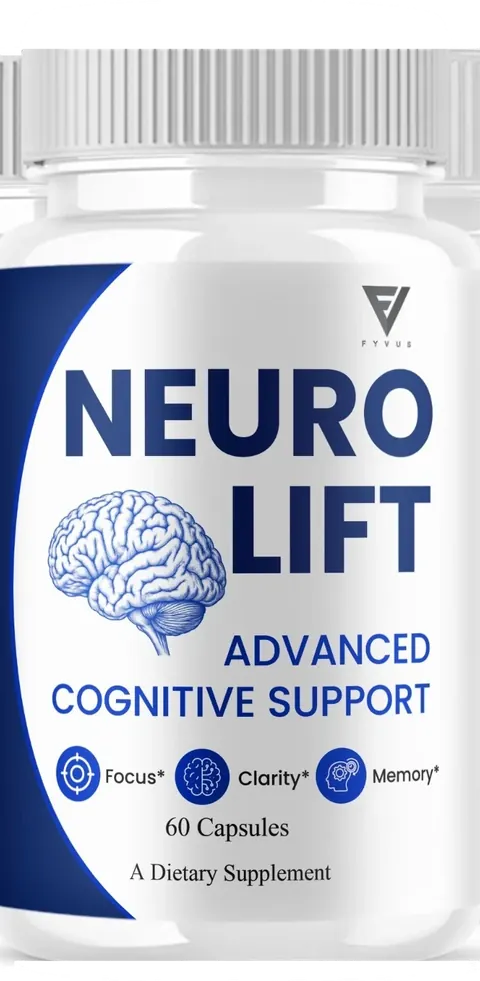
Front of the bottleShort structure-function words with the FDA asterisk. They name a goal, not a measured result.
- Marketing only
Promotes mental clarity and focus
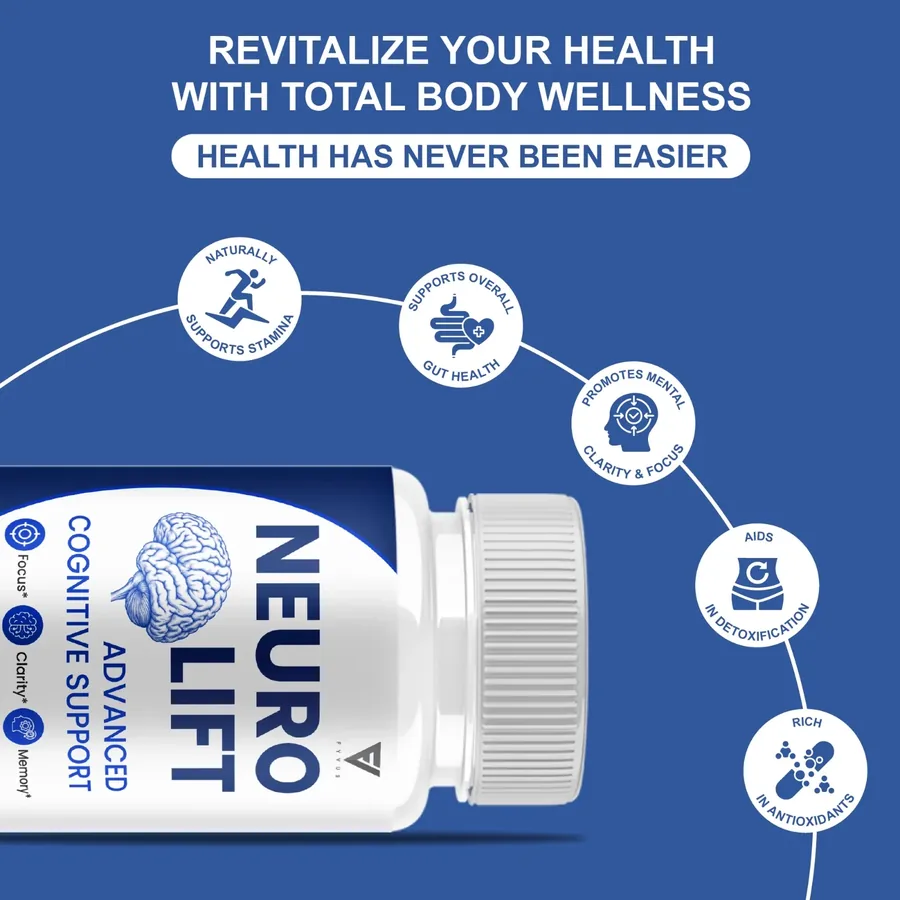
Brand imageA sales line from the brand's images. No trial of this product stands behind it.
- Marketing only
Help for people managing neuropathy
eBay item descriptionNot on the label. Neuropathy is a medical condition, and this capsule is not a treatment for it.
The vitamins have real amounts: 240 mcg of B12 and 600 mcg DFE of folate, useful to people who are low. The botanicals are the part the label leaves blank.
Ginkgo at its studied 240 mg, bacopa at 300 mg and L-theanine at 200 mg would already need 740 mg, more than the whole blend. Our Neuro Lift blend versus research post works through that math line by line.
How can you tell if a brain supplement is worth trying?
Check five things before you pay, all of them from the label and a little reading.
- Every active ingredient shows its own amount, not just a blend total.
- Those amounts match what human trials used, for as long as the trials ran.
- The trials were randomized and placebo-controlled.
- The label avoids disease words such as treat, cure or prevent dementia.
- You have checked the ingredients against your medicines with a pharmacist.
Measured that way, Neuro Lift passes the disease-word test and fails the amount test. Our guide to choosing a brain supplement explains each check, and the Neuro Lift Supplement Facts page shows every line.
Do brain supplements work? Questions people ask
What does Mayo Clinic say about whether brain supplements work?
We did not use a Mayo Clinic page, so we cannot speak for it. The NIH, Cochrane and Alzheimer's Association sources we read agree that no supplement is proven to protect memory in healthy adults.
Do any brain supplements work?
A few, in narrow cases. B12 and folate matter for people who run low, and bacopa and L-theanine showed small, early effects. None is proven to prevent memory loss or dementia.
Which brain supplements actually work for memory?
None has strong proof for healthy memory. Bacopa at 300 to 450 mg a day for 12 weeks or more has the best small trials, and its effect was mainly on attention speed.
Do OTC brain supplements work as well as prescription drugs?
No. Medicines need FDA approval before sale and supplements do not, and no supplement is approved to treat memory loss or dementia.
Does the FDA test brain supplements before they are sold?
No. The FDA lacks the power to clear supplements as safe or effective before they reach stores, so calling a supplement "FDA approved" is wrong.
Is any supplement proven to clear brain fog?
Our sources include no trial of a supplement for brain fog itself. Fog can come from drug side effects, low B12, depression or thyroid trouble, so see a doctor before you buy a capsule.
Has Neuro Lift been proven to work?
No. No study of the Neuro Lift formula has been published, and its blend amounts are not printed, so single-ingredient trial results do not carry over.
Which brain supplements work for memory, and where does Neuro Lift fit?
Evidence is small and early. Bacopa, L-theanine and lutein show modest results at set doses, and B12 and folate matter mainly when levels are low. Neuro Lift has no study of its own, so it cannot be ranked.
Does Neuro Lift work like other brain supplements?
There is no way to say. Neuro Lift has never been studied as a formula, and ten of its blend amounts are not printed, so its ingredients cannot be matched to the doses used in studies.
Page check
Written by
Writes and fact-checks every page against the Supplement Facts panel, the back label and public health sources.
Medically reviewed by
Dr. Gianna Link, MD, PhD, MD, Physician
Medical reviewer. Review date: October 12, 2026.
- Last checked October 12, 2026
- Facts from the bottle, the sales page and the sources cited above
- Found an error? Write to [email protected] or read how we check facts